Pereiti į turinį

Residents

Close

Vytautas Jurevičius

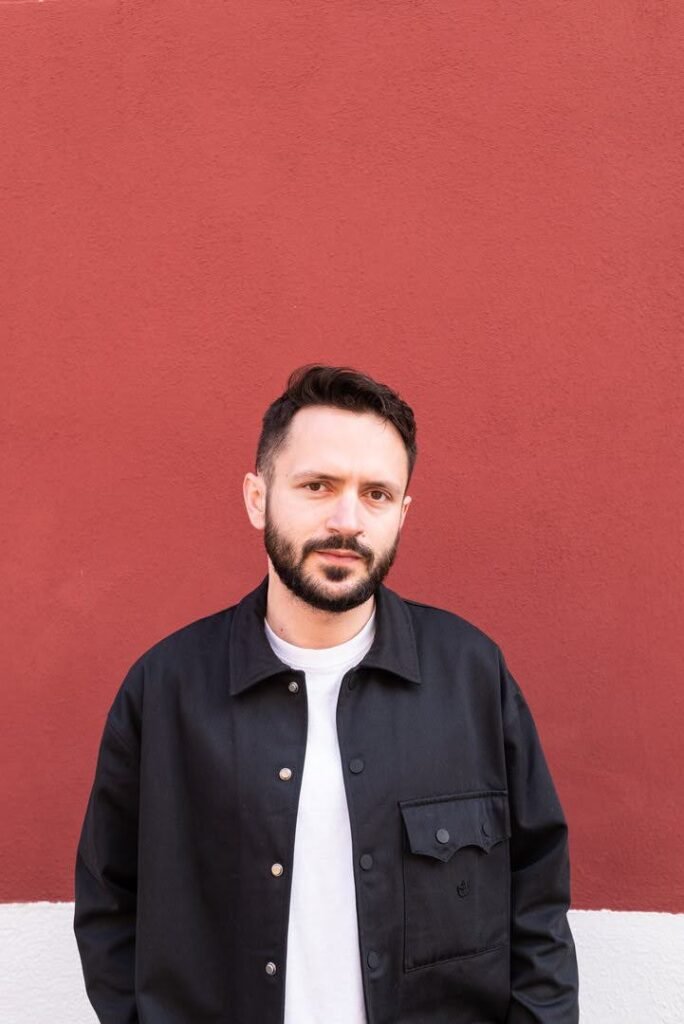
Vytautas Jurevičiusis an artist, horticulturalist, and garden designer whose practice moves between fine art, landscape, and the restorative potential of living environments. He studied at the University of Applied Arts Düsseldorf, the Academy of Arts Karlsruhe, and the Städelschule in Frankfurt am Main, and is the founder of both the Institut of Emotional Bodies and Vivus Naturae. Raised on the Baltic Coast surrounded by meditative pine forests, his sensitivity to space, atmosphere, and the relationship between people and place runs through everything he makes. Rooted in the belief that gardens are essential for mental wellbeing and social connection, his design practice creates spaces where people can gather, slow down, and feel grounded.

Vytautas background comes from community event organisation, artist collaboration, and creative project management — a collaborative, client-centred approach to shaping environments where nature and daily life meaningfully intersect.
Rudolfas Levulis

Rudolfas Levulis is an artist and filmmaker working across the audiovisual sector, actively combining commercial and personal creative practice. A graduate of the Vilnius Academy of Arts (2006), he founded the platform pvz.lt, through which he continues to develop projects to this day. His work spans a wide spectrum — from virtual internet platforms to physical public and natural environments — and draws on an equally broad range of mediums: sculpture, architecture, film, photography, and computer programming.

His cross-media projects are often complex, multi-stage, and interactive, and carry a recurring interest in societal marginalisation, experimental anthropology, and the intersection of art with scientific research. His films have screened at international festivals including the Architecture Film Festival Rotterdam and Uppsala International Film Festival.

https://www.pvz.lt/

Paulius Janušonis

Paulius Janušonis is a Lithuanian artist working across performance, music, and video. Reflecting on mortality and transience through the lenses of propaganda, mental health, and generational trauma, xe is interested in observing phenomena that tend to fade in the face of crisis.

https://jp370.com/

Beatričė Mockevičiūtė

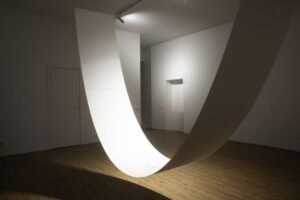
Beatričė Mockevičiūtė is a younger generation artist with an acutely sensitive eye for the world around her. Working with everyday and industrial materials, she redirects their ordinary purpose — turning them into subtle instruments of observation. Her practice is bound to the possibility of sensing what is usually transparent and ephemeral in daily life: apartment blocks visited by reflections of sunlight, or the canvas covers of freight trucks billowing in the wind — meticulously made by human hands, yet simultaneously autonomous and unpredictable. The gaze is her primary instrument, one that allows her to recognise and name such overlooked characters of everyday existence. She holds an MFA from the Vilnius Academy of Arts and received the Young Artist’s Award at ArtVilnius ’16.

Mykolas Sauka

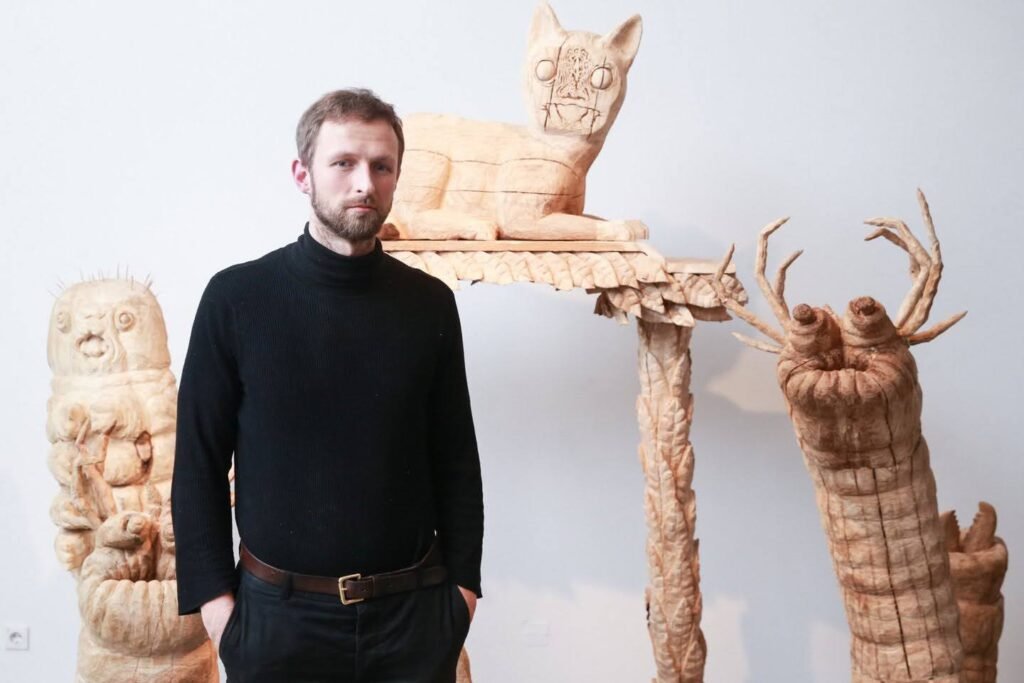
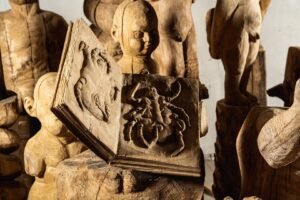
Mykolas Sauka is a sculptor and writer. Working primarily in concrete as well as wood — a material he connects to Lithuanian baroque tradition, folk sanctity, and the contemporary body. His large-scale figurative works probe ideals of beauty, identity, and bodily discomfort, and have been presented in public commissions and exhibitions across Lithuania and abroad. In 2024 his solo exhibition Children’s Room opened at Galerie Olivier Waltman in Paris as part of the Lithuanian Season in France. He was awarded Lithuanian Government Young Creator Award in 2022. As a writer, he won the First Book competition of the Lithuanian Writers’ Union in 2014 with the short story collection Grubiai (Roughly), later awarded the Kazimieras Barėnas Prize for the best prose debut under 35. His second book, the novel Kambarys (The

Room, 2024) — a portrait of loneliness and absurdity in the dating lives of young generations — was listed among the Twelve Most Creative Books of the Year by the Institute of Lithuanian Literature and Folklore and among the 5 Best Prose Books of the Year.

Laura Garbštienė

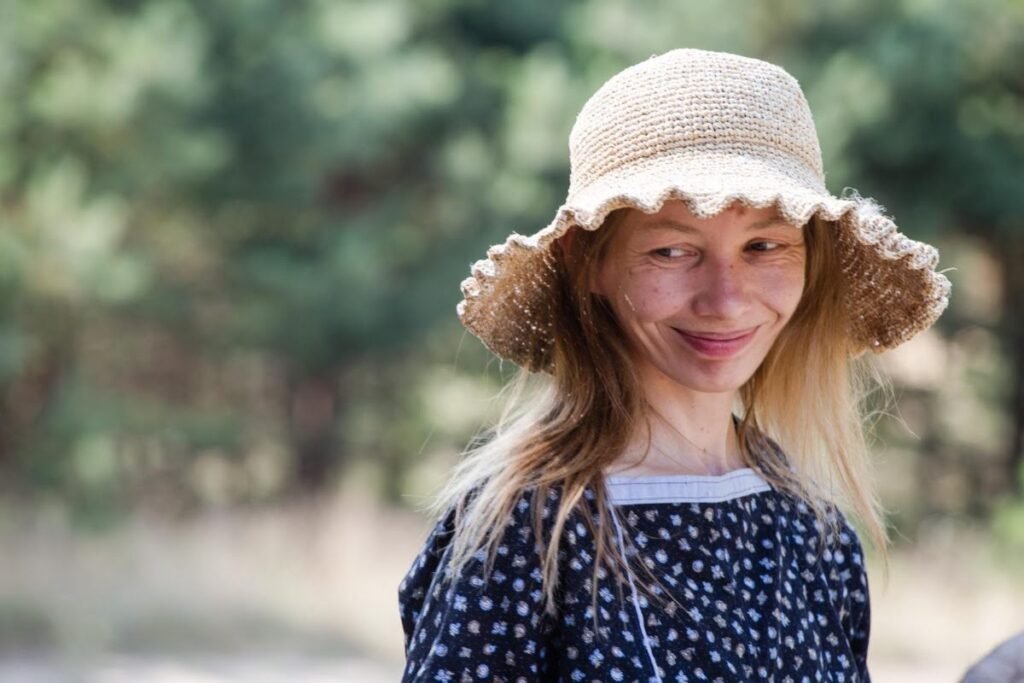
Laura Garbštienė is an interdisciplinary artist and a farmer. Her work features a humorous institutional critique, the development of ecological themes and a critical approach to consumerism. Her Film about an Unknown Artist (2009) received FIPRESCI Prize at the Oberhausen International Short Film Festival. In 2024, she was awarded the highest award of the Ministry of Culture of Lithuania – the Honorary Badge “Carry Your Light and Believe”.

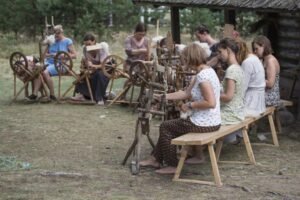
She is founder and curator of Verpėjos (The Spinners). The Verpėjos international artist residency programme aims to explore and rethink the themes of traditional, rural and nature conservation, to empower discourse on processes and changes both locally and globally. https://verpejos.lt/?lang=en

Andrius Arutiunian

Andrius Arutiunian is an Armenian-Lithuanian artist and composer working with hybrid forms of listening, vernacular knowledges, and contemporary cosmologies. His installations, films, and performances experiment with temporality, resonance, and alternate methods for world-ordering — challenging, through playful and hypnotic forms, the very concepts of musical and political attunement. In 2022 he represented Armenia at the 59th Venice Biennale with the solo exhibition Gharīb; further solo shows include Fondation d’entreprise Hermès Tokyo and Kunstmuseum Magdeburg.

His work has been presented at major biennials including Shanghai, Gwangju, Lyon, Performa NYC, and the Baltic Triennial, and at institutions such as the Centre Pompidou, Palais de Tokyo, and M HKA Antwerp. In 2024 he was shortlisted for the Future Generation Art Prize and was a DAAD artist-in-residence fellow in 2023. His works are held in the collections of the Centre Pompidou and KADIST.

https://andriusarutiunian.com/

Julijonas Urbonas

Julijonas Urbonas is an artist, researcher, and engineer whose practice moves between extraterrestrial art, critical design, amusement park engineering, performative architecture, choreography, and science fiction. A former Pro-Rector of the Vilnius Academy of Arts and former director of a Soviet amusement park in Klaipėda, he is currently an associate professor at the Vilnius Academy of Arts and the founder of the Lithuanian Space Agency. At the core of his work is the concept of gravitational aesthetics—an approach that exploits the manipulation of gravity to push the body and imagination to their extremes, yielding projects ranging from a fatal roller coaster to an artificial asteroid composed entirely of human bodies

Informed by postphenomenology, space medicine, and particle physics, his work has been presented at major art, design, and architecture biennials worldwide, including the 17th Venice Architecture Biennale in 2021. He received the Award of Distinction in Interactive Art at Prix Ars Electronica in 2010, and his works are held in the collections of the Lithuanian Art Museum, the X Museum Beijing, and the ZKM Center for Art and Media Karlsruhe.

https://julijonasurbonas.lt/

Kris Lemsalu

Kris Lemsalu is an Estonian artist whose eclectic practice weaves together performance, found objects, handcrafted works, and immersive installation. Animal pelts, foodstuffs, porcelain body parts, and hand-dyed textiles combine into anthropomorphic amalgamations that undergo sometimes comic, sometimes unsettling metamorphoses — blurring the human with the bestial, the domestic with the feral, craft with art production.

Her work lives in the tension between vibrant transformation and imminent decay, and carries distinct feminist overtones in its refusal to deprive women of their subjectivity. Based between Tallinn and New York, she represented Estonia at the 58th Venice Biennale in 2019, and her works are held in the collections of the Centre Pompidou, Kiasma, and the Museum of Modern Art Warsaw.

Robertas Narkus

Robertas Narkus works at the threshold of art, management, and everyday life — initiating projects that operate as events, enterprises, and social experiments simultaneously. By hyperbolising and lightly ironising the nebulous systems of neoliberal power, and generously using the tools they offer, he creates his own unique order — one that leverages societal mechanisms as strategies aimed at an aesthetic, relational, or performative product. Such hybridity makes his work uniquely bound to the systems in which it operates: the art world, the art market, and society itself. Among his initiatives are the Vilnius Institute of Pataphysics, an artists’ day care centre Autarkia, an experimental engineering camp eeKulgrinda.

His work has been shown at the Baltic Triennial, Performa , Whitechapel Gallery London, and Ballroom Marfa. In 2022 he represented Lithuania at the 59th Venice Biennale with Gut Feeling — a project that pointed equally to entrepreneurial instinct and the microbiology of the human gut.